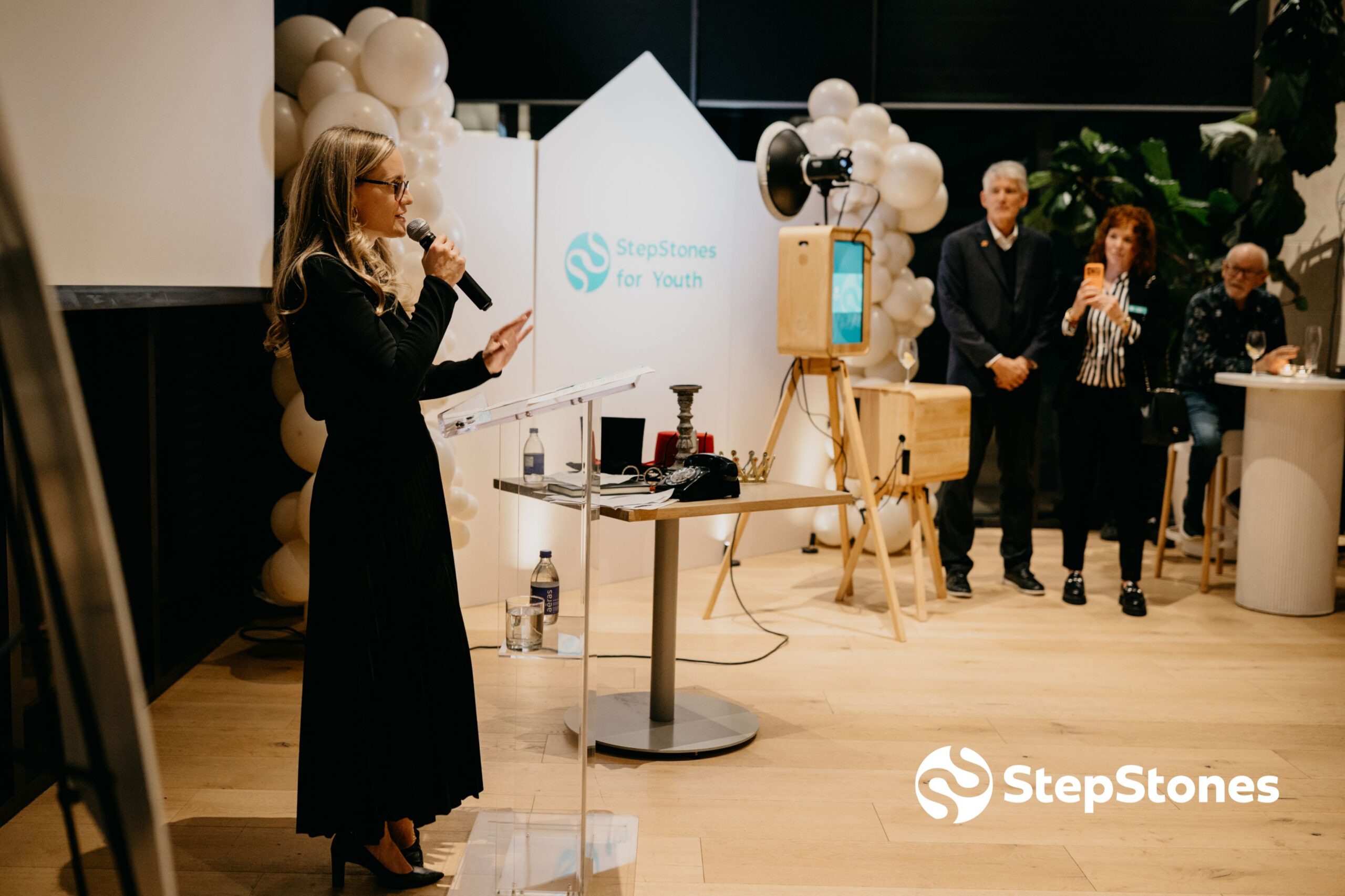
For Heather O’Keefe, CEO of StepStones for Youth, the connection between housing, belonging and education emerged from years of examining what improved outcomes for young people in foster care.
Since 2004, StepStones has tested interventions, including tutoring, scholarships and mentorship. While these helped young people become more enthusiastic about school, they weren’t increasing high school graduation rates, Heather explains.
A 2019 internal review identified two primary barriers to educational success: housing instability and a lack of meaningful connections.
“The two things that were the most effective in terms of high school graduation were housing stability and people in their circle, so belonging,” Heather says. Particularly important were relationships with adults who weren’t being paid to support them, she adds.
StepStones shifted its approach, redirecting resources from post-secondary scholarships toward helping young people secure stable housing and develop lasting relationships.
Today, StepStones reports a high school graduation rate of 81% among young people aged 21 and older who had previously disengaged from school.
Through its venture with CAFC, StepStones is testing whether a model developed for young people aged 15 to 25 can produce similar results when focused on those aged 17 to 19, when the transition out of care often coincides with the final years of high school.
If successful, the venture could help build the evidence needed to reach more young people across Canada before housing instability disrupts their education.
“This is a solvable problem,” Heather says. “This is something we know how to solve; we just have to do it.”


